


Quick Inquiry
Considered as one of the most important aspects of any gas to gas or gas to liquid type of heat-exchanger, finned tubes are compact units of vigorous and damage-resistant construction.
The outside surface of fin tubes is covered with small fins. The role of these fins is to act as a transfer process and filter. The heat transfer is generally from inside to the outside and reverse. The rate of heat transfer by a particular type of fin tube can depend upon:
- Temperature difference between the fluids/gas
- Heat transfer between the fluids and the walls of the tubes
- The exposed surface
There are various types of finned tubes that finned tube manufacturers produce. And the type required for a particular process depends on the process equipment unit.
G-Type finned tubes are known as embedded-fin tubes where g means grooved. They are formed by twisting a fin strip made of copper or aluminium into a machined groove and back-filling to secure the lock. Base tube material is filled. The G-type fin tube is strong as compared to other tubes. Hence, it is widely used where high-temperature heat transfer is required.
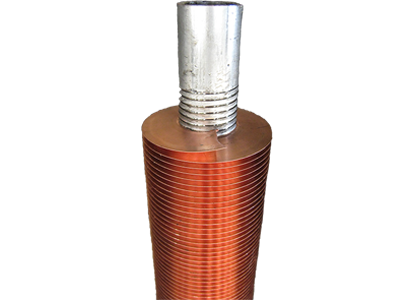
G-Type Finned Tube Features
- Compact design
- High-performance
- Easy installation
- Less space required
- Less cabling
- Optimized surface
- Finest technology used
- Average corrosion protection
- Less energy consumption
- Increased reliability
- Low maintenance
- High mechanical resistance
In G-type finned tubes, the fins are prepared by embedding the metal strip into a groove. The latter is formed on a base tube. Placing the fin on it, back-filling is done – resulting in strong attachment of the fins to the base tubes. Hence, the name G-Fin Tubes has come up. The three processes mentioned above are carried out simultaneously. Maximum heat transfer is expected out of the g-fin tubes as the fins are strongly attached to the base tube.
The G-type finned tubes usually work at high temperature (with around 400 degree Celsius) applications. Made of copper, carbon, or aluminium, these fins have comparatively less resistance towards atmospheric corrosion. On the other hand, mechanical resistance is acceptable. Stainless steel and carbon steel fin materials are also used, but particular processing and tooling of the steel fin strips are necessary. Air coolers, radiators, etc use the g-fin tubes.
Industries Where G-Type Finned Tubes Are Used:
- Rubber plants
- Power plants
- Petroleum industries
- Chemical industries
If you are looking for G type fin tubes or grooved fin tubes, get in touch with the experts at Anand Seamless Ltd. by calling +91-9909232552. We can help you choose the most relevant product as per your needs.
lATEST BLOG |
|
Finned Tube Heat Exchanger Selection Guide for Rice Mills, Dairy and Food Plants in India
A finned tube heat exchanger is one of the most im |
|
Why Cold-Drawn Tubes Are the Best Choice for Aerospace Component Manufacturing
When it comes to aerospace manufacturing, the sele |
|
How Seamless Steel Pipes Ensure Safety in High‑Pressure Boiler Systems
When it comes to ensuring the safe operation of hi |
|
Why Seamless Tubes and Pipes Are Gaining Popularity in Heavy-Duty Industries
In the world of heavy-duty industries, where high |
|
How Finned Tubes Help Combat Fouling in Heat Exchangers: Solutions for Clean Heat Transfer
Heat exchangers are the heart of many industrial s |