


Quick Inquiry
In industrial operations, selecting the right alloy steel seamless tube is critical to ensure efficiency, durability, and safety. Businesses in sectors like oil & gas, power generation, chemical processing, and marine applications often face challenges when choosing the correct grade due to varying operational pressures, temperatures, and chemical exposures. Using the wrong grade can lead to premature wear, corrosion, or operational failures, resulting in costly downtime and maintenance.
This guide by Anand Seamless Ltd, a leading manufacturer and exporter of alloy steel seamless tubes, finned tubes, heat exchanger tubes, and U-tubes, provides a comprehensive framework to help you select the right tube grade tailored to your industry’s needs. By the end of this guide, you will have a clear understanding of how to make informed, cost-effective, and reliable decisions for your industrial tubing requirements.
What are Alloy Steel Seamless Tubes
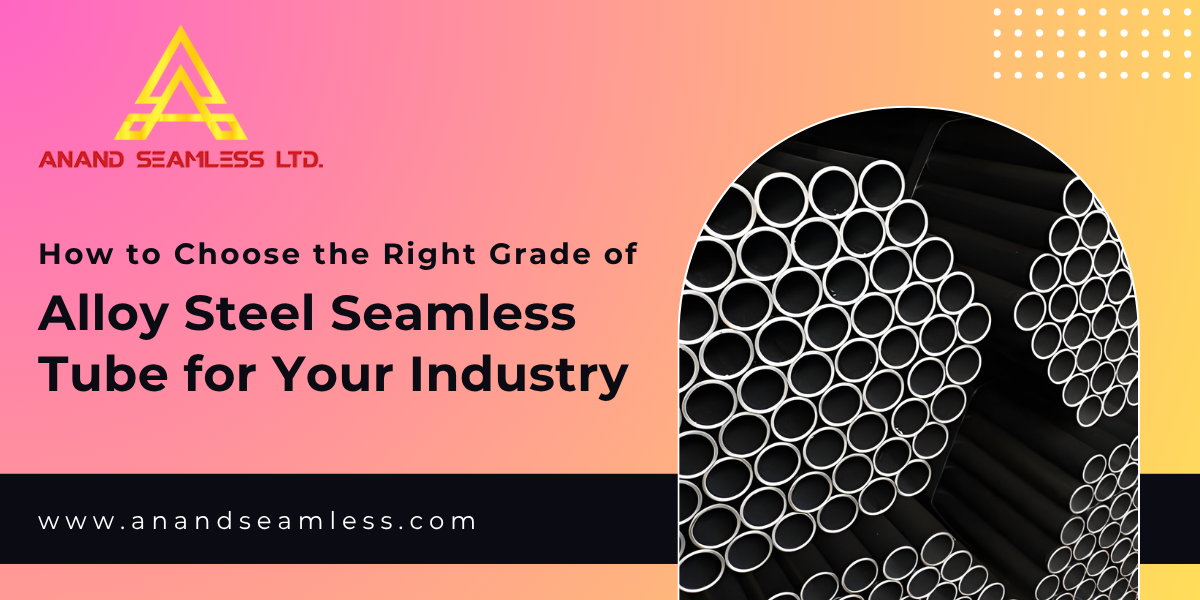
Alloy steel seamless tubes are precision-engineered tubes made from high-quality alloy steel. Unlike welded tubes, seamless tubes are manufactured from a solid billet through processes like piercing, extrusion, and cold drawing. This process ensures uniformity, superior strength, and durability.
Alloying elements such as chromium, nickel, and molybdenum enhance corrosion resistance, mechanical strength, and high-temperature performance. Selecting the appropriate grade ensures your steel seamless pipes can withstand extreme pressures, high temperatures, and corrosive environments, making them ideal for applications such as finned tubes, heat exchangers, and U-tubes.
At Anand Seamless Ltd, we have been producing high-quality alloy steel seamless tubes and related products since 2006. Our ISO 9001:2015 accreditation, along with approvals from EIL, IBR, PDIL, Pemex, and ADNOC, positions us as a trusted partner for industrial tube solutions worldwide.
Why Choosing the Right Grade Matters
Selecting the correct alloy steel seamless tube grade directly impacts:
- Operational Efficiency: Proper grade selection ensures optimal performance under design conditions.
- Longevity: High-quality alloy tubes resist corrosion and withstand pressure and temperature fluctuations, extending service life.
- Safety: Industrial environments require tubes that can handle extreme operational conditions safely.
- Cost-Effectiveness: Reduces maintenance costs and prevents operational downtime caused by premature tube failure.
By aligning tube grades with operational requirements, you can maximize performance and ROI while minimizing risks.
Get Expert Guidance!
Key Factors to Consider When Choosing Alloy Steel Tube Grades
Operating Temperature and Pressure
Understanding the temperature and pressure conditions of your application is crucial:
- High-temperature applications: Boiler tubes, heat exchangers, and steam pipelines require grades like P91 or P22, which offer superior thermal strength.
- High-pressure applications: Alloy steel seamless tubes are designed to resist deformation under extreme pressures, making them ideal for chemical plants and oil pipelines.
Choosing a tube grade that can withstand the operational environment ensures reliable performance and safety.
Corrosion Resistance Requirements
Corrosion can significantly compromise tube integrity, especially in harsh industrial environments. Consider:
- Chemical applications: Exposure to acids, alkalis, or corrosive chemicals requires alloys such as 304L or 316L.
- Marine and offshore applications: High-salinity environments demand tubes with superior corrosion resistance achieved through nickel and chromium alloys.
At Anand Seamless, we design alloy steel seamless tubes tailored to your corrosion resistance needs, ensuring long service life with minimal maintenance.
Mechanical Strength and Durability
Mechanical strength is essential for applications under constant stress:
- Tensile strength: Determines how well tubes can handle operational loads.
- Fatigue resistance: Important for pipelines and heat exchangers experiencing cyclic pressures.
- Hardness and wear resistance: Ensures tubes remain durable in abrasive or high-flow environments.
Choosing the right grade ensures steel seamless pipes withstand operational stresses efficiently, reducing risks of tube deformation or failure.
Compliance with Industry Standards
Industrial projects demand strict adherence to standards:
- ASME, ASTM, and API standards define chemical composition, mechanical properties, and testing protocols.
- Compliance ensures safety, reliability, and regulatory approval for international and domestic projects.
Anand Seamless Ltd produces all alloy steel seamless tubes to meet or exceed these standards, making them suitable for global industrial applications.
Cost vs Performance Trade-offs
While higher-grade alloys may have a higher initial cost, the long-term benefits outweigh the expense:
- Reduces downtime, maintenance, and replacement costs.
- Ensures reliability and operational efficiency over the tube’s lifecycle.
Selecting the right grade balances cost with performance, particularly in industries where failure is not an option.
Detailed Alloy Steel Grade Guide
Understanding specific grades helps make an informed decision. Here’s a comparison of common grades:
| Alloy Steel Grade | Key Properties | Typical Applications | Temperature & Pressure Limits |
Corrosion Resistance |
| P11 | High-temperature strength | Boilers, Steam Pipelines | Up to 540°C | Moderate |
| P22 | Excellent creep resistance | Heat Exchangers | Up to 580°C | High |
| P91 | High fatigue & tensile strength | Power Plants, Oil & Gas | Up to 600°C | Very High |
| 304L | Corrosion-resistant | Chemical, Petrochemical | Up to 870°C | High |
| 316L | Superior corrosion & marine resistance | Marine, Offshore | Up to 900°C | Very High |
Each grade has distinct advantages and limitations, and selecting the wrong one can lead to premature tube failure, costly maintenance, or operational hazards.
Advanced Manufacturing Insights
At Anand Seamless Ltd, our manufacturing process ensures the highest quality alloy steel seamless tubes:
- Cold Drawing: Achieves precise dimensions and tight tolerances.
- Heat Treatment: Relieves stress and enhances mechanical properties.
- Non-Destructive Testing (NDT): Ultrasonic and eddy current testing detect flaws before delivery.
- Quality Inspections: Every tube is subjected to stringent checks for dimensional accuracy, tensile strength, and corrosion resistance.
These processes guarantee that our alloy steel seamless tubes perform reliably in critical industrial applications worldwide.
Industry-Specific Grade Recommendations
Oil & Gas Industry
- Recommended Grades: P22, P91
- Requirements: High-temperature and pressure resistance, corrosion resistance
- Why: Maintains structural integrity in refineries, subsea pipelines, and high-pressure environments.
Power Generation
- Recommended Grades: P11, P22, P91
- Requirements: Boiler tubes, steam pipelines, and heat exchangers
- Why: High-temperature strength and long-term durability are crucial for thermal and nuclear power plants.
Chemical & Petrochemical Industry
- Recommended Grades: 304L, 316L, Alloy 20
- Requirements: Resistance to acids, alkalis, and chemical compounds
- Why: Ensures operational safety and prevents contamination in critical processes.
Automotive & Aerospace
- Recommended Grades: High-strength, lightweight alloys
- Requirements: Fatigue resistance, strength-to-weight ratio
- Why: Optimizes performance while minimizing weight in vehicles and aircraft.
Common Mistakes in Tube Selection
Even experienced professionals can make mistakes. Avoid these pitfalls:
1. Overlooking operational temperature or pressure requirements.
Selecting a tube grade without considering the specific temperature and pressure it will face can lead to premature failure or deformation. Ensuring the grade matches operational conditions helps maintain safety, efficiency, and long-term performance.
2. Choosing a lower-cost grade without considering lifecycle performance.
While cheaper options may save money upfront, they can result in higher maintenance costs and shorter service life. Investing in the right grade ensures durability, reduces downtime, and maximizes ROI over the tube’s lifecycle.
3. Ignoring corrosion resistance in chemical or marine environments.
Failing to account for chemical exposure or saline conditions can cause leaks, contamination, and structural damage. Selecting corrosion-resistant grades ensures reliable operation and protects critical industrial processes.
4. Not consulting certified manufacturers for guidance.
Relying solely on internal knowledge may lead to incorrect specifications or unsuitable materials. Working with certified manufacturers provides expert recommendations, guarantees quality, and ensures compliance with international standards.
Anand Seamless Ltd helps businesses avoid these errors with expert recommendations, ISO-certified products, and international-standard approvals, ensuring reliable solutions for your projects.
Frequently Asked Questions
Q1: What is the difference between alloy steel and carbon steel seamless tubes?
Alloy steel seamless tubes contain additional elements like chromium, nickel, and molybdenum, enhancing corrosion resistance, high-temperature strength, and durability compared to carbon steel tubes.
Q2: Can alloy steel seamless tubes be customized for specific industries?
Yes. Anand Seamless Ltd offers customized steel seamless pipes, including dimensions, grades, and heat treatment processes tailored to your industrial requirements.
Q3: How do I know which grade is suitable for high-temperature applications?
Grades like P22, P91, and P11 are designed for high-temperature and high-pressure environments. Consulting with an experienced manufacturer ensures accurate selection.
Q4: Are Anand Seamless alloy steel tubes compliant with international standards?
Yes. All alloy steel seamless tubes, U-tubes, and finned tubes meet ISO 9001:2015 and are approved by EIL, IBR, PDIL, Pemex, and ADNOC.
Q5: Which industries rely on alloy steel seamless tubes?
Industries like oil & gas, power generation, chemical, petrochemical, automotive, and aerospace use these tubes for critical high-performance applications.
Q6: How do alloy steel seamless tubes compare to welded tubes in efficiency?
Seamless tubes offer superior strength, uniformity, and corrosion resistance. They minimize pressure loss and reduce maintenance compared to welded tubes, making them more efficient for industrial applications.
Q7: Can Anand Seamless provide custom dimensions or surface finishes?
Yes. We provide customized dimensions, finishes, and grades to meet unique project requirements while ensuring compliance with international standards.
Get the Best Seamless Tubes for Your Industry
Looking for premium seamless tubes that deliver unmatched strength, durability, and precision? Anand Seamless Ltd is a leading manufacturer and exporter of alloy steel and carbon steel seamless tubes, finned tubes, U-tubes, and heat exchanger tubes since 2006.
Our seamless tubes are ISO 9001:2015 certified and approved by top organizations including EIL, IBR, PDIL, Pemex, and ADNOC. We provide customized solutions tailored to your industry’s exact requirements, whether for high-temperature, high-pressure, or corrosion-resistant applications.
Contact us today to discuss your project, get expert guidance, and order the highest quality seamless tubes directly from India’s leading manufacturer. Explore our full range at Anand Seamless Ltd and ensure your operations run safely, efficiently, and reliably.
lATEST BLOG |
|
How Seamless Steel Pipes Ensure Safety in High‑Pressure Boiler Systems
When it comes to ensuring the safe operation of hi |
|
Why Seamless Tubes and Pipes Are Gaining Popularity in Heavy-Duty Industries
In the world of heavy-duty industries, where high |
|
How Finned Tubes Help Combat Fouling in Heat Exchangers: Solutions for Clean Heat Transfer
Heat exchangers are the heart of many industrial s |
|
Custom Finned Tube Design for Concentrated Solar Power (CSP) Heat Exchangers
As India expands its renewable energy capacity, Co |
|
Common Boiler Tube Failures and How to Prevent Them
Boilers are crucial components in many industrial |