
High-Frequency Welded Spiral Fin Tubes Serrated
Our Product
Serrated Spiral Fin Tubes
(High-Frequency Welded – Serrated Type)
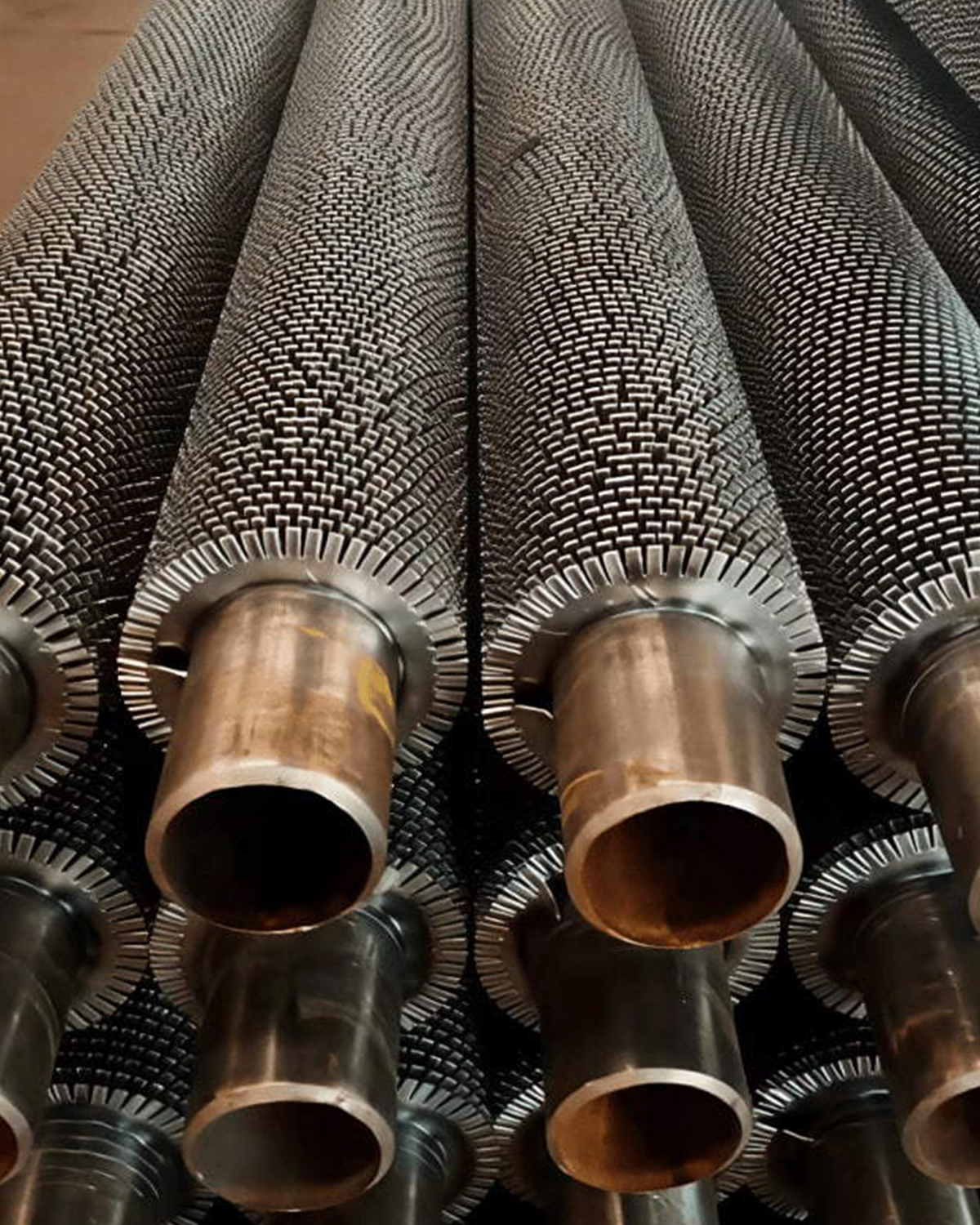
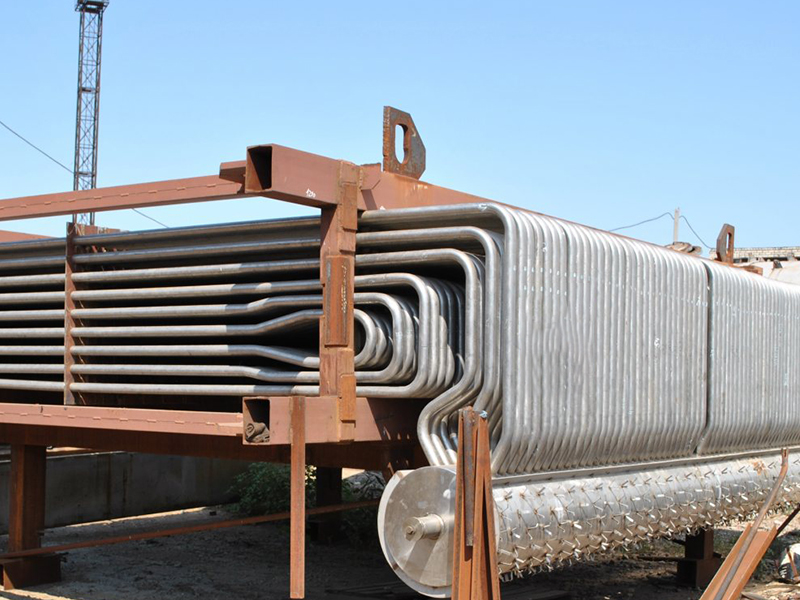
Anand Seamless Ltd. offers Serrated Spiral Fin Tubes, a variation of solid spiral fin tubes designed to enhance turbulence in the fluid flow and improve heat transfer rates. These fins are horizontally cut or notched, creating a serrated profile that breaks the laminar flow on the fin surface and increases heat exchanger efficiency.
Manufactured using High-Frequency Induction Welding, the serrated strip is continuously welded to the base tube with 100% metallurgical bond, ensuring mechanical durability and thermal performance in harsh operating environments.
Serrated finned tubes are preferred in systems where fouling or dust accumulation is common, as they can maintain better thermal efficiency even under deposit-laden conditions.
Technical Specifications
|
Sr. No. |
Particulars |
Range |
|---|---|---|
1 |
Base Tube Material |
Carbon Steel, Alloy Steel, Stainless Steel |
2 |
Base Tube OD |
31.75 mm to 225 mm |
3 |
Tube Length |
Up to 18,000 mm |
4 |
Fin Material |
Carbon Steel, Stainless Steel |
5 |
Fin Height |
9.8 mm to 25 mm |
6 |
Fin Thickness |
0.8 mm to 1.5 mm |
7 |
Fin Density (Pitch) |
79 FPM (2 FPI) to 276 FPM (7 FPI) |
8 |
Fin Type |
Serrated Spiral Fin |
9 |
Bonding Method |
High-Frequency Welded |
10 |
Temperature Range |
Up to 400°C |
11 |
Surface Area Enhancement |
15–25% over solid fin equivalents |
12 |
Maintenance |
Cleanable with mechanical/chemical methods |
International Standards Applicable
- ASTM A213 / A106 / A335 (Base Tubes)
- EN 10204 – 3.1 / 3.2
- ASME / API 560 compliance for thermal components
- Optional TPI: Lloyd’s, SGS, TUV, etc.



Frequently Asked Questions (FAQs)
What advantage do serrated fins offer over solid fins?
Serrated fins disrupt laminar air flow, increasing turbulence and boosting heat transfer efficiency.
Can serrated fin tubes handle high temperatures?
Yes. They are designed for continuous use in systems operating up to 400°C, depending on the base material.
Are serrated fin tubes suitable for dusty environments?
Yes. They maintain heat transfer efficiency even in systems prone to fouling or deposit accumulation.
Can I request a mix of solid and serrated designs in the same order?
Absolutely. We support mixed-batch orders tailored to different zones of your heat exchanger.