
Heat Exchanger Tube Material for Seawater and Chloride-Rich Applications
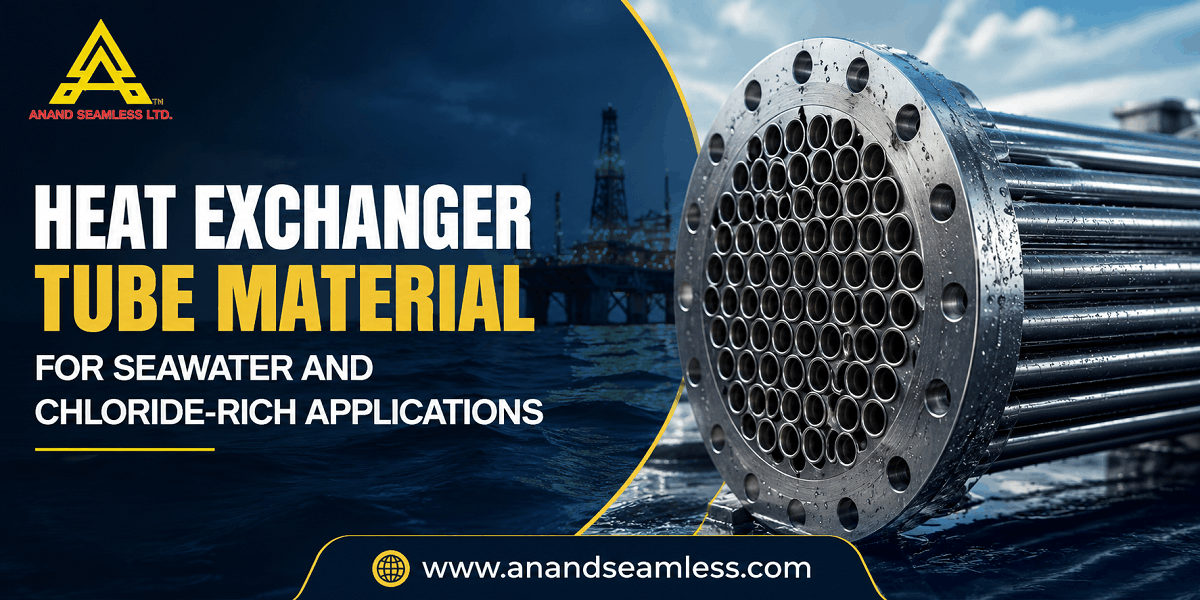
Seawater looks like a convenient cooling medium on paper, but in actual plant conditions, it is one of the toughest fluids to handle. Chlorides, dissolved oxygen, temperature swings, fouling, and stagnant zones can attack metal surfaces quickly and quietly.
That is why the wrong heat exchanger tube material can turn a reliable system into a recurring maintenance problem. In marine plants, desalination units, coastal power stations, offshore platforms, and chemical facilities, tube failure often starts with small corrosion spots and ends with leakage, downtime, and costly retubing.
What Is the Best Heat Exchanger Tube Material for Seawater and Chloride-Rich Applications?
The best heat exchanger tube material for seawater and chloride-rich applications depends on operating temperature, chloride level, flow velocity, and expected service life. In most demanding applications, duplex stainless steel and titanium are preferred because they offer strong resistance to pitting, crevice corrosion, and chloride stress corrosion cracking.
For moderate marine service, copper-nickel alloys and selected stainless steels may work well, but the final choice should always be based on actual process conditions, not just purchase price.
Why Seawater Is So Hard on Heat Exchanger Tubes
Seawater is not just water with salt in it. It is a chemically active environment that attacks metal surfaces in multiple ways at once. That is why heat exchanger tubes used in seawater service must do more than simply transfer heat. They must survive corrosion, pressure, vibration, and fouling over long operating cycles.
The Most Common Failure Mechanisms Are:
- Pitting corrosion, where small cavities form and deepen unnoticed
- Crevice corrosion, especially in tube-to-tube sheet gaps and deposits
- Chloride stress corrosion cracking, which can cause sudden failure in susceptible alloys
- Erosion-corrosion, usually caused by high velocity or suspended solids
- Under-deposit corrosion, often linked to biofouling and poor cleaning
These problems are especially dangerous because they do not always show visible warning signs. A tube may look acceptable from the outside while thinning or cracking internally.
Why This Matters for Plant Owners
When industrial heat exchanger tubes fail, the damage is rarely limited to one component. Leakages can contaminate product streams, reduce thermal efficiency, and force shutdowns that affect the entire operation. In critical utilities, even a short outage can create a much larger financial loss than the original tube cost.
Choosing the Right Heat Exchanger Tube Material
Material selection starts with understanding the service environment, not the catalogue. A tube that performs well in mild cooling water may fail quickly in seawater or brine.
1) Chloride Concentration
Higher chloride content increases the risk of localised corrosion. Freshwater, brackish water, and seawater behave very differently. A material that works in low-salinity service may not survive in coastal or marine conditions.
2) Operating Temperature
Temperature is one of the biggest drivers of corrosion. Many stainless steels that perform adequately in ambient seawater become much less reliable as temperature rises. This is why heat exchanger tubing must be selected with the full operating range in mind, not only the normal condition.
3) Flow Velocity
Velocity is a balancing act.
- Too low: fouling and sediment build-up increase
- Too high: erosion-corrosion becomes a real risk
A good design keeps velocity within an acceptable range for both heat transfer and material protection.
4) Mechanical Load and Pressure
The selected alloy must tolerate internal pressure, vibration, thermal expansion, and possible water hammer effects. A strong alloy with poor fabrication control can still fail early.
5) Maintenance and Shutdown Strategy
In many plants, the real question is not “Which material is cheapest?” but “Which material keeps the plant running longest with the least intervention?” That is where lifecycle thinking matters.
Comparison of Common Heat Exchanger Tube Materials
The table below gives a practical view of the most common choices for chloride-rich environments.
| Material | Corrosion Resistance | Seawater Suitability | Relative Cost | Typical Use |
| Carbon Steel | Low | Poor | Low | Low-corrosion utility systems |
| 304 Stainless Steel | Moderate | Limited | Medium | Mild industrial service |
| 316 Stainless Steel | Better | Moderate | Medium | Light chloride exposure |
| Duplex Stainless Steel | Excellent | Excellent | High | Marine, offshore, desalination |
| Copper-Nickel Alloys | Very Good | Excellent | High | Shipbuilding, condensers |
| Titanium | Outstanding | Exceptional | Very High | Critical seawater systems |
This is where heat exchanger tube types also matter. Different geometries, wall thicknesses, and surface finishes may improve heat transfer or resistance to fouling, but no geometry can compensate for the wrong base material in an aggressive chloride environment.
Why Duplex Stainless Steel Is a Strong All-Round Choice
Duplex stainless steel is often the best balance between performance and cost for seawater service. It combines good mechanical strength with strong corrosion resistance, which makes it a dependable option for many heat exchanger tubes used in marine and offshore projects.
Key Advantages of Duplex Stainless Steel
- Excellent resistance to chloride attack
- Better strength than many standard stainless grades
- Good resistance to stress corrosion cracking
- Strong lifecycle value in demanding service
Where It Is Commonly Used
- Offshore cooling systems
- Desalination plants
- Coastal refineries
- Marine condensers
- Chemical plants with saline feed water
Practical Example
Imagine a coastal plant running continuous seawater cooling at an elevated temperature. A lower-grade alloy may appear acceptable during procurement, but repeated tube replacements every few years can create more cost than a duplex upgrade would have caused upfront. In that case, the stronger heat exchanger tube material becomes the cheaper choice over the full service life.
Are Titanium Tubes Worth the Higher Cost?
Titanium is often the premium solution for highly aggressive seawater applications. It is especially valuable where failure is unacceptable and maintenance access is difficult.
Why Titanium Performs So Well
Titanium naturally forms a stable protective oxide layer that resists seawater corrosion extremely well. This makes it highly effective in services where many alloys eventually struggle.
Where Titanium Is Justified
- Desalination systems
- High-value process cooling
- Nuclear and power applications
- Critical marine service
- Long-life utility systems
Simple Lifecycle Logic
A plant may hesitate at the initial cost of titanium industrial heat exchanger tubes, but the total cost equation often changes when you factor in:
- Fewer shutdowns
- Lower inspection frequency
- Longer replacement intervals
- Less risk of contamination
For some projects, titanium is not a luxury. It is a risk reduction.
Common Material Selection Mistakes to Avoid
A surprising number of failures come from design and procurement shortcuts rather than material defects.
Avoid These Mistakes:
- Choosing material based only on purchase price
- Ignoring the chloride concentration and temperature together
- Using a stainless grade that is too low for seawater
- Overlooking stagnant zones and crevice-prone locations
- Ignoring galvanic compatibility with tube sheets and fittings
- Failing to verify manufacturing and testing records
These mistakes are costly because heat exchanger tubing often fails gradually. A project can run for months before the underlying corrosion turns into a visible leak.
A Case-Based Example
A plant may initially select a lower-cost alloy for seawater cooling because it looks “good enough” on paper. But once operating temperature rises, and deposits begin to build up, corrosion accelerates. That small procurement saving then turns into repeated tube plugging, reduced efficiency, and emergency maintenance.
The lesson is simple: the cheapest tube is not always the most economical tube.
Best Practices to Extend Tube Life in Chloride-Rich Service
Good material selection should be supported by good operating practice. Even the best heat exchanger tube material can underperform if the system is poorly managed.
Operational Best Practices
- Keep flow velocity within the recommended range
- Avoid stagnant pockets and dead zones
- Clean fouling deposits before they become aggressive corrosion sites
- Monitor chloride levels, pH, and oxygen content
- Inspect regularly using non-destructive methods
Useful Inspection Methods
- Eddy current testing
- Ultrasonic testing
- Hydrotesting
- Positive Material Identification (PMI)
- Visual inspection during scheduled shutdowns
These checks help plant teams catch thinning, cracking, and deposit-related damage before a leak forces an unplanned outage.
How Buyers Should Evaluate Heat Exchanger Tube Manufacturers and Suppliers
Choosing the right alloy is only half the job. The other half is choosing the right manufacturing partner. Reliable heat exchanger tube manufacturers should provide consistent quality, full traceability, and tested material compliance.
What to Check Before Ordering
- Material certificates and traceability
- Compliance with relevant ASTM or ASME requirements
- Dimensional accuracy and finish quality
- Testing support and inspection documentation
- Export experience for project-based supply
- Ability to supply custom sizes and specifications
The best heat exchanger tube suppliers do more than ship products. They help buyers match service conditions with the right metallurgy, tolerances, and test requirements.
Questions to Ask Suppliers
- Which corrosion tests are performed?
- Are mill test certificates available?
- Can the material handle chloride-rich service at the stated temperature?
- What is the manufacturing and inspection standard?
- Can the supplier support project documentation needs?
A strong supplier saves time, reduces risk, and improves confidence in the final installation.
Why Tube Type Also Matters
Material is the primary decision, but geometry and construction still influence performance. Different heat exchanger tube types may be selected depending on space, maintenance access, and service conditions.
For example:
- Straight tubes may simplify cleaning
- U-tubes may be chosen where thermal expansion is a concern
- Finned or enhanced surfaces may improve heat transfer in some systems
Still, the tube type should support the material choice, not override it. In seawater service, the heat exchanger tube material is still the main defence against corrosion.
Final Takeaway
Seawater and chloride-rich service places unusual stress on any heat transfer system. The wrong alloy may look acceptable during procurement, but it can fail early under real operating conditions.
For most demanding applications, the best heat exchanger tube material is usually duplex stainless steel or titanium, with copper-nickel and selected stainless steels suitable for less aggressive service. The final decision should always account for chloride concentration, temperature, flow velocity, pressure, and lifecycle cost.
When buying heat exchanger tubes, look beyond the price tag. Evaluate service conditions, corrosion risk, tube design, fabrication quality, and the credibility of heat exchanger tube manufacturers and suppliers. That is the difference between a short-term purchase and a long-term industrial solution.
For engineers, EPC teams, and plant operators, the right choice of industrial heat exchanger tubes is not just a technical decision. It is a reliability decision.
Need Help Selecting the Right Heat Exchanger Tube Material?
Anand Seamless Limited manufactures high-quality heat exchanger tubing for demanding industrial applications, including marine, desalination, offshore, refinery, and other chloride-rich service environments. If your project needs reliable performance, corrosion resistance, and long service life, the right material selection can make all the difference.
Our range of industrial heat exchanger tubes is engineered to withstand harsh operating conditions such as high chloride exposure, elevated temperatures, pressure variations, and corrosive process media. With a strong focus on quality, precision manufacturing, and international standards compliance, we help industries choose the most suitable heat exchanger tube material for long-term operational efficiency and reduced maintenance costs.
Whether you require duplex stainless steel, corrosion-resistant alloys, or customised tubing solutions, our team is committed to delivering reliable products tailored to your application requirements.
Contact Anand Seamless Limited at +91 99099 68550 or +91 90999 96853 to discuss your project requirements and find the right heat exchanger tube solution for your industry.