
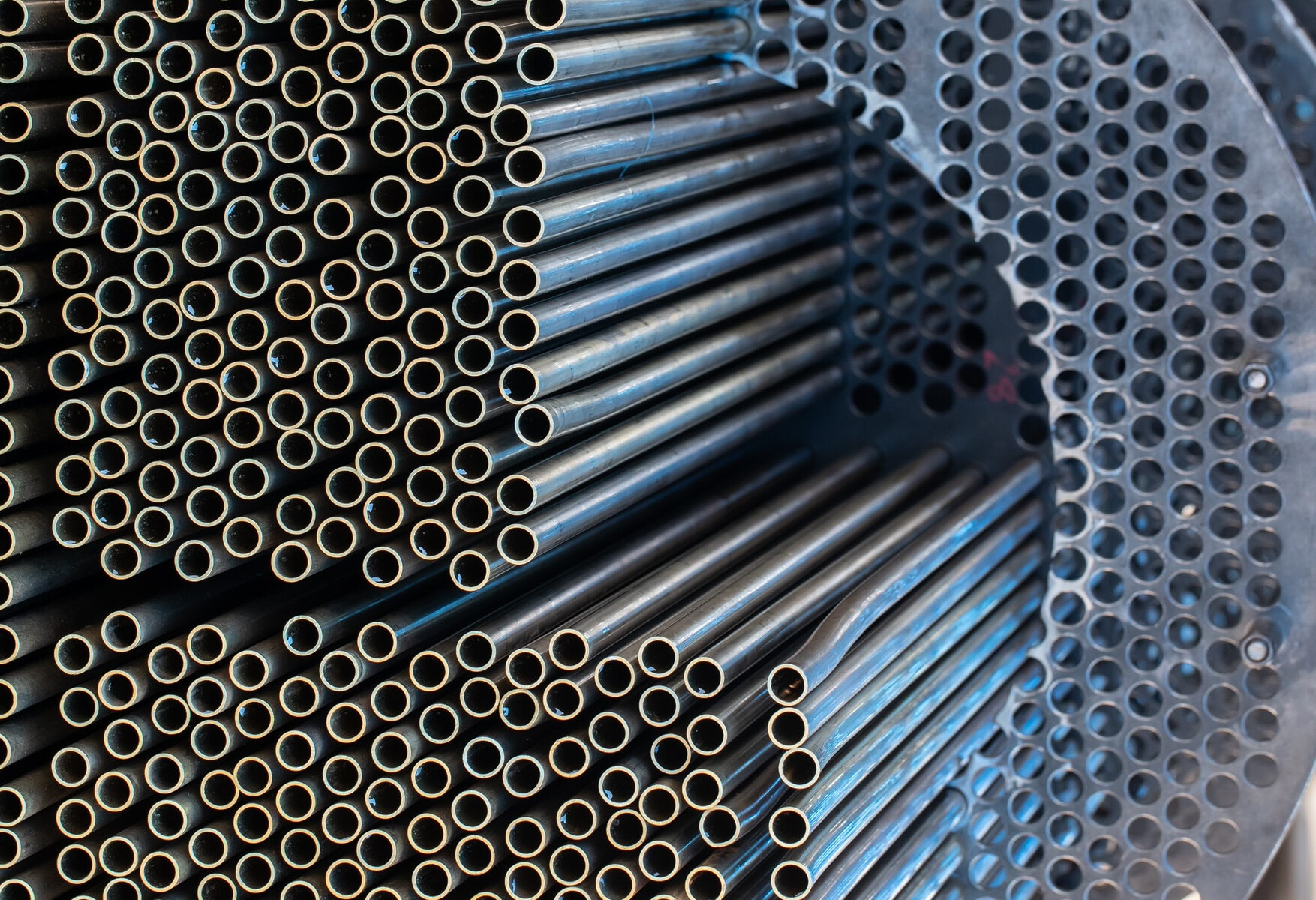
When buyers compare carbon steel heat exchanger tubes, the wall thickness often looks like a simple dimensional detail. In practice, it affects far more than the drawing. It influences compliance with the applicable specification, tube expansion behaviour, thermal performance, fabrication consistency, bundle weight, and total project cost. That is why the difference between minimum wall and average wall matters in real procurement and engineering decisions, especially when the order involves replacement bundles, retubing, condensers, feedwater heaters, or other critical heat-transfer duties.
For many projects, the issue starts with terminology. A buyer may assume that one wall-thickness basis can be substituted for another without consequence. But widely used tube specifications for heat-transfer service, including ASTM A179, ASTM A214, and ASTM A556, are written around minimum-wall-thickness requirements, not a vague “close enough” interpretation.
ASTM A450, which provides general requirements for many carbon and low-alloy steel tube specifications, also recognises the concept of actual mean wall in cross-sectional variation. Put simply, wall-thickness language is not just wording. It changes how a tube is specified, measured, accepted, and used.
Quick Answer: What is the Difference?
A minimum wall tube is ordered, so the specification is built around a stated minimum wall thickness, and the permissible variation is evaluated from that requirement. An average wall concept, by contrast, is tied to the average of the thickest and thinnest walls in a cross section, which ASTM A450 describes as the “actual mean wall.” In real projects, that difference matters because a tube can look acceptable by simple measurement at one point, yet still behave differently during expansion, pressure service, inspection, or replacement work.
For heat exchanger tubes, the safest approach is to match the wall-thickness basis to the governing standard, the service conditions, and the fabrication method. Treating minimum wall and average wall as interchangeable can create avoidable confusion between the purchase order, inspection documents, and workshop expectations.
Why This Matters More in Heat Exchangers Than in Generic Tube Buying
A heat exchanger does not judge tubing by appearance alone. The tube has to survive pressure, transfer heat efficiently, fit the tubesheet correctly, tolerate rolling or expansion, resist vibration, and maintain service life in the actual medium. That is why carbon steel heat exchanger tubes are usually purchased with much tighter attention to wall thickness than general-purpose tubing. Even small misunderstandings can affect fabrication or lifecycle performance once the exchanger is built and operating.
This is especially relevant when the buyer is dealing with shutdown schedules, replacement bundles, or plant uptime targets. In operating facilities, a retubing decision is often driven by cost, time, and reliability. If the replacement tube does not align with the original dimensional intent, the project can run into rework, expansion inconsistency, or performance compromises that are expensive to solve after delivery.
Where Buyers Commonly See Minimum-Wall Language
The most common standards discussion around carbon steel heat exchanger tubes sits in ASTM A179, ASTM A214, and ASTM A556. ASTM A179 covers seamless cold-drawn low-carbon steel tubes for tubular heat exchangers, condensers, and similar heat-transfer equipment. ASTM A214 covers electric-resistance-welded carbon steel tubes for heat exchangers and condensers. ASTM A556 covers seamless cold-drawn carbon steel tubes, including U-tubes if specified, for tubular feedwater heaters. All three are framed as minimum-wall-thickness specifications.
That matters because many buyers focus first on OD, length, and material grade, while the acceptance logic is often shaped by the wall-thickness basis in the relevant standard. ASTM A450 adds broader general requirements for carbon and low-alloy steel tubes and defines the actual mean wall as the average of the thickest and thinnest walls in a section. So even when a buyer is discussing one product family, there is still an important distinction between how the product standard is written and how dimensional variation may be evaluated.
What the Difference Means in Real Projects
1. It Affects Compliance and Inspection
If carbon steel heat exchanger tubes are ordered to ASTM A179, A214, or A556, the inspector checks them against that specific standard, not a general assumption. The tube has to be checked against the actual governing standard and the dimensional acceptance framework that comes with it. This is why buyers should be cautious about substitutions based only on “equivalent size” or “nearby thickness.” A visually similar tube is not automatically a specification match.
2. It Affects Thermal Performance
Wall thickness contributes to thermal resistance through the tube wall. The basic conduction term increases as wall thickness increases, and carbon steel has far lower thermal conductivity than highly conductive materials such as copper alloys. For common heat-exchanger materials, Engineering Toolbox lists carbon steel at about 45 W/mK. That means unnecessary wall build-up may not destroy performance on its own, but it does add resistance and can work against thermal efficiency when multiplied across a large bundle.
A simple illustration shows the point. If a 3/4-inch OD carbon steel tube increases in wall thickness from roughly 1.65 mm to 1.83 mm while the OD remains fixed, the metal-wall conduction resistance increases by about 12 per cent. In a real exchanger, overall duty depends on fluid-side coefficients, fouling, and design conditions too, but thicker-than-necessary walls still add resistance, weight, and cost without automatically adding useful value.
3. It Affects Fabrication and Tube Expansion Behaviour
Tube expansion into the tubesheet is not guesswork. Tube OD, wall thickness, hole ID, and target wall reduction all influence rolling parameters. Tube wall thickness directly affects expansion calculations, and poor alignment between tube dimensions and fabrication assumptions can lead to sealing issues or poor joint quality. In other words, the wall basis matters not only on paper but also on the shop floor.
4. It Affects the Weight and Project Cost
More metal usually means more cost. If a project over-specifies wall thickness to “play safe,” it may end up paying for extra raw material, added bundle weight, and more difficult fabrication without a proportional gain in reliability. That is why experienced buyers do not automatically treat thicker as better. They match the wall basis to the duty, the standard, and the exchanger design intent.
A Practical Comparison Table
Project Question | Why It Matters | What to Check |
| Is the order written to a minimum-wall spec? | Governs how the tube is accepted | Confirm ASTM A179, A214, A556, or other applicable standard |
| Will a thicker wall improve the job? | Not always; it can increase resistance, weight, and cost | Review duty, pressure, corrosion allowance, and bundle design |
| Is tube expansion into the tubesheet part of the fabrication process? | Wall variation affects rolling behaviour and joint consistency | Align tube dimensions with fabrication method and hole data |
| Is this a retubing project? | Legacy equipment may require closer dimensional matching | Verify OD, wall basis, length, and tubesheet layout before ordering |
Four Situations Where Buyers Feel the Difference Immediately
1. New Equipment Procurement
For new builds, the design datasheet, purchase order, and QA documents need to use the same wall-thickness language. If engineering specifies one basis and procurement buys on another assumption, the confusion often appears only when inspection or fabrication begins. For carbon steel heat exchanger tubes, alignment at the order stage is much cheaper than correction later.
2. Retubing and Replacement Jobs
Retubing is often more cost-effective than full replacement, but it is also less forgiving of loose dimensional thinking. The new tube has to work with an existing exchanger geometry, tubesheet, and service history. Matching OD alone is not enough. The wall basis can influence fit, expansion behaviour, and the finished joint.
3. High-Duty Service
In feedwater heaters, condensers, and other demanding services, wall-thickness choices interact with pressure handling, metal temperature, and equipment reliability. ASTM A556, for example, is written specifically for seamless cold-drawn carbon steel tubes used in tubular feedwater heaters, including U-tubes if required. This reinforces the need to choose heat exchanger tubes based on operating conditions rather than rough dimensional matching.
4. Cost-Sensitive Projects
Where budgets are tight, some buyers are tempted to simplify the issue and treat all wall-thickness descriptions as commercially interchangeable. That can be a false economy. If the supplied carbon steel seamless tube is not properly aligned with the specification and fabrication requirements, the cost of delay, re-inspection, or performance compromise can quickly exceed the apparent purchase saving.
What Buyers Should Check Before Finalising an Order
Before placing an order for carbon steel heat exchanger tubes, buyers should confirm:
- The governing standard or customer specification
- Whether the order is written on a minimum-wall basis
- OD, wall thickness, and length together, not in isolation
- Whether the tube will be expanded, welded, bent, or retubed
- Documentation and inspection expectations
- Whether the selected wall adds necessary integrity or only extra cost
These checks help prevent disputes between engineering, procurement, fabrication, and inspection teams. They also make it easier to work effectively with a qualified heat exchanger tube manufacturer that understands both specification language and practical fabrication requirements.
Conclusion
In real exchanger projects, the difference between the minimum wall and the average wall is not academic. It affects compliance, fabrication, thermal behaviour, and total project economics. For carbon steel heat exchanger tubes, the right decision starts with matching the wall-thickness basis to the governing standard and the actual service requirement. That is how buyers reduce ambiguity, avoid rework, and protect exchanger performance over the long term.
If you are evaluating heat exchanger tubes for a new project, a shutdown, or a retubing requirement, work with a technically informed supplier that can review the specification in practical terms, not just quote a size. Anand Seamless Limited supports buyers looking for reliable carbon steel heat exchanger tubes and precision-driven carbon steel seamless tube solutions backed by manufacturing understanding, application awareness, and quality-focused execution.
Get the Tube Specification Right Before You Order
When wall thickness is misunderstood, the problem rarely stays on paper. It can affect compliance, fabrication, performance, cost, and long-term reliability. If you are sourcing carbon steel heat exchanger tubes for a new project, retubing requirement, or replacement order, Anand Seamless Limited can help you evaluate the specification with greater clarity.
From dimensional requirements to application suitability, the right technical guidance can help prevent costly specification errors. Connect with our team at +91 90999 96853 or email us at biz@anandseamless.com for international inquiries or inquiry@anandseamless.com for domestic inquiries to discuss your requirement in detail and source dependable heat exchanger tubes built for real industrial performance. Make your next order more accurate, efficient, and project-ready.