


Quick Inquiry
Finned tubes are usually used in heat exchangers. But you may wonder what these finned tubes are and why they are used over normal tubes in these exchangers. Here’s everything you need to know about finned tubes.
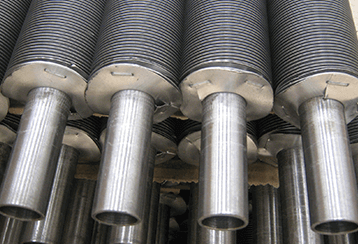
What Are Finned Tubes?
Finned tubes are elongated flat tubes that are made of aluminium-clad carbon steel and are provided with brazed aluminium fins. These tubes are used in a series of heat exchangers. The advantage they offer over ordinary tubes is that the fins offer greater contact with the liquid outside. This quickens the exchange of heat between the liquid inside the tube and the one outside it. With a normal tube, the rate of exchange of heat would be much slower.
Finned tubes are available in different shapes. They are available as oval tubes, round tubes, and flat tubes.
What Are Their Uses?
Finned tubes are particularly useful in the case of air heat exchangers. In an air heat exchanger, the heat transfer takes place between a liquid and a gas. With the heat coefficient of the airside being lower, a finned tube can be exceptionally helpful. A finned tube increases the surface area and thus helps in faster heat transfer between the components.
Example of Fin Tube Heat Exchangers
Fin tube heat exchangers are used in household appliances and industrial heat exchangers. Fin tube heat exchangers are used in air conditioners and car radiators. The purpose of using a finned tube in an air conditioner is to cool the air passing through it. In a car radiator, it cools the liquid in the tube with the air passing through in crossflow.
Materials, Construction and Why It Matters
Finned tubes are not all built the same. The choice of tube material and fin material, as well as how the fins are attached, plays a major role in the final performance of a finned tube heat exchanger or fin tube piping installation.
- Common base materials for the tube itself include carbon steel, stainless steel, copper, and occasionally more specialised alloys (for corrosion‑resistance or high-temperature duty).
- Fin material is often aluminium, because aluminium offers high thermal conductivity while keeping weight and cost low. In some cases, fins may also be made from copper or other alloys when the application demands higher durability, strength, or better corrosion resistance.
- Brazing is the most common fin attachment method for permanent, secure fins. Weld-on fins and mechanical-fin options are rare but possible for certain specialised applications.
Why This Matters:
Thermal conductivity, durability under temperature cycles, resistance against corrosion or fouling — all affect the long-term efficiency and reliability of your finned tube system. By selecting the correct combination of tube and fin material, you ensure that your finned pipe or finned tube piping installation remains efficient and durable over years of service.
Types of Finned Tubes and Fin Configurations
Not all finned tubes look or behave the same. There are several design variants, each optimised for different use cases. Below are the common types.
Spiral‑Finned Tubes
These have a continuous fin wrapped helically around the tube. The design works well when you expect high air velocity or turbulent airflow around the tube. The spiral design helps maintain strength under vibration and offers uniform fin distribution.
Plate‑Finned Tubes
Here, fins are attached as flat plates along the length of the tube. Plate fins tend to offer more fin surface area per length compared to spiral fins. They are preferred when maximum surface area is needed in a constrained space, for instance, in compact air-cooled heat exchangers.
Extruded Finned Tubes
In this variant, the tube and fin are extruded together as one piece. The fins are part of the tube wall from the beginning. This can offer excellent thermal contact between tube and fin, reduce points of potential thermal resistance (as there’s no brazed joint), and offer good mechanical robustness.
Wire‑Wound or Weld‑On Fins
Less common but useful in specialised scenarios. In wire-wound fins, a metal wire is helically wound around the tube and then compressed or welded in place. Weld-on fins are plates welded to the tube surface. These options may suit high-temperature or aggressive chemical environments where brazing may be less reliable or where dissimilar metallurgy is a concern.
Each type of fin configuration offers trade-offs in heat transfer efficiency, pressure loss (airside), mechanical robustness, and cost. Choosing the right type depends on the fluid involved, temperature, airflow characteristics, and budget constraints.
Key Design Factors for Finned Tube Heat Exchangers
When designing a finned tube-based system, whether a small air‑cooler or a large industrial heat exchanger, these are the crucial parameters to consider:
- Fin density (fins per inch or fins per mm): More fins increase surface area, which improves heat transfer. But too many fins can raise airflow resistance, increasing pressure drop and requiring more fan power.
- Fin height/thickness: Taller fins provide more surface area but must be balanced against structural strength (to handle airflow, vibration) and corrosion potential. Thicker fins may resist wear, but thinner fins transfer heat slightly faster (due to higher fin surface-to-volume ratio).
- Tube diameter and material: Larger diameter tubes may carry more fluid, but will reduce the number of tubes per exchanger; small diameter tubes increase surface-area-to-fluid-volume ratio, which can improve heat transfer when used in large numbers. Material choice affects thermal conductivity, corrosion resistance, and welding/brazing compatibility.
- Airside vs. waterside flow characteristics: Finned tube designs are especially beneficial when you have a fluid inside (water, oil, coolant) and a gas, like air, outside. Because gases generally have lower heat transfer coefficients, fins help compensate by increasing the external surface area.
- Corrosion, fouling, and maintenance requirements: If the outside fluid is corrosive (salty air, chemical-laden gas) or carries dust/particulates, fin material and coating must be chosen to resist corrosion or fouling. Maintenance access and cleaning cycles should be factored into the design.
By carefully balancing these parameters, a fin tube heat exchanger can hit the sweet spot of high performance, reasonable cost, and long service life.
Advantages of Using Finned Tubes
Finned tubes offer several advantages:
-
Increase Heat Transfer Rate
The fins in a finned tube increase the surface area of contact. This allows it to quicken the heat transfer rate.
-
Improve Heat Transfer Coefficient
In an ordinary tube, the outer surface area is just about the same or slightly different from the inner surface area. In such a case, the fluid with the lowest heat transfer coefficient will drive the entire heat transfer rate. A finned tube increases the surface area significantly. This is particularly helpful when the heat transfer coefficient of the fluid inside the tube is greater than that of the fluid outside the tube.
-
Reduces the Size of the Equipment and Makes the Project Cost-Effective
Finned tubes can significantly increase the surface area. The use of a finned tube can cut down the number of tubes used in an application. This results in a considerable reduction in the size of the equipment. In the long run, this can lead to a decrease in the cost of the project.
If you are looking for high-quality finned tubes, you should consult the experts at Anand Seamless Tubes – leading finned tube manufacturers in Ahmedabad!
Industrial Applications and Real‑World Use Cases
While air conditioners and car radiators (as you already mentioned) are familiar examples, finned tubes, and by extension finned pipes, are used in many industrial settings. Here are some heavy-duty use cases:
- Air-cooled condensers and coolers in power plants: In thermal power plants, once steam passes through turbines and condenses, finned tube condensers help transfer heat from the steam to ambient air, enabling the reuse of condensed water or disposal of waste heat.
- Oil refinery and petrochemical heat exchangers: Many refinery processes involve heating or cooling chemicals, crude oil fractions, or steam. Finned tube heat exchangers offer a compact, efficient solution, especially where space is tight, or fluids need to be cooled by air or another gas.
- Chemical plants and process industries: Wherever a hot liquid must be cooled or a cold fluid heated via gas flow, like in evaporators or gas coolers, finned tubes help maintain stable temperatures efficiently.
- HVAC systems for large commercial buildings or industrial facilities: Large air-handling units often use finned tube coils for heating, cooling, or dehumidification. Because the heat exchange surface area is large in a compact volume, these systems remain efficient and cost-effective.
- Refrigeration and chillers: In industrial refrigeration, finned tube coils are used where refrigerant flows inside tubes and air flows outside (or vice versa), facilitating heat exchange for the cooling cycle.
In each of these cases, the use of finned tubes reduces the size and number of tubes needed. That shrinks the overall equipment footprint, which cuts capital costs, makes installation easier, and reduces ongoing energy costs due to efficient heat transfer.
Maintenance, Longevity, and Cost‑of‑Ownership Considerations
Using finned tubes is not just about performance; long-term maintenance, durability, and lifecycle cost need planning from the start. Here are factors to weigh:
- Corrosion control: Especially when fins and tubes are made of dissimilar metals (e.g. aluminium fins with stainless or carbon steel tubes), galvanic corrosion can occur. Using compatible materials or protective coatings helps prevent this.
- Fouling and cleaning access: In air-cooled systems, dust, debris, or airborne contaminants can settle on fins over time and reduce efficiency. Design should allow for periodic cleaning (blow-down, brushing, or chemical cleaning). Choosing fin materials that resist fouling helps.
- Mechanical stress and vibration: Industrial systems may subject finned tubes to vibration or thermal cycling. Spiral-finned or welded fins may hold up better under such stress than brazed plate fins.
- Inspection and replacement costs: Accessible tube bundles, modular exchanger design, and standardised tube sizes help minimise downtime and replacement costs over the system life.
Over a 10–20 year service life, carefully chosen finned tubes can outperform plain tubes many times over, delivering savings in energy, maintenance, and replacement costs. That often makes the higher upfront cost worth it for industrial applications.
How to Choose the Right Finned Tube for Your Project
When planning a new installation or retrofitting an existing one, selecting the proper finned tube design can make a big difference. Here’s a practical checklist to guide you:
- Define the fluids and flow media — inside tube and outside: Is the outside medium air, gas, or liquid? What are the temperatures, flow rates, and chemical properties?
- Decide the fin type based on application demands:
- For high air/gas velocity or turbulent flow → spiral-finned tubes.
- For compact design and maximum surface area in tight spaces → plate-finned or extruded finned tubes.
- Select materials carefully: Match tube and fin materials for thermal conductivity, corrosion resistance, and chemical compatibility. Consider coatings if needed.
- Balance fin density and airflow resistance: Too many fins can choke air flow, hurting performance. Use computational or empirical design calculations to optimise.
- Account for maintenance and cleaning needs: Choose fin type and spacing that allow for periodic cleaning; consider the environment (dust, chemicals, humidity).
- Consider long-term lifecycle costs, not just upfront cost: Energy savings from efficient heat transfer, reduced maintenance frequency, and longer replacement intervals often justify higher initial cost.
By following these steps, you can select a fin tube heat exchanger or finned pipe system that delivers high performance, stability, and a favourable cost-to-benefit ratio.
Why Finned Tubes from Us Are a Smart Investment
As a manufacturer, we offer a wide range of finned tubes, finned pipes, and complete fin tube piping solutions built to exacting standards. Here’s how we help ensure you get the right fit:
- Material flexibility: Whether you need carbon steel, stainless steel, copper, or alloy tubes with aluminium, copper, or special alloy fins, we can meet the requirement.
- Design flexibility: Spiral finned, plate finned, extruded finned options, we deliver finned tubes tailored to your application’s airflow, space constraints, or thermal duty.
- Quality manufacturing processes: We use precise brazing or other fin attachment methods for strong thermal contact; finishing and coating options for corrosion resistance and long life.
- Technical support: We guide you on fin density, fin height, tube size, and other design parameters, helping you select optimal combinations based on your fluid, temperature, and flow requirements.
- After-sales advice: On maintenance, cleaning, and bundle replacement, we offer guidance so your system remains efficient for decades.
If you’re planning a new installation or upgrading an older one, using the right finned tube design makes a meaningful difference in performance, cost, and lifespan.
Reach Out to Us For Advice on the Right Products!
Anand Seamless Ltd offers a wide range of products including finned tubes, fin tube heat exchangers, etc. From high-quality seamless tubes to hydraulic tubes and from seamless pipes to mechanical tubes, we have a huge range of products. To know more you can call us at +91-9909232552 or send your queries to inquiry@anandseamless.com.
Also Read:
Reasons why Oil and Gas Companies Use Finned Tubes
lATEST BLOG |
|
How Seamless Steel Pipes Ensure Safety in High‑Pressure Boiler Systems
When it comes to ensuring the safe operation of hi |
|
Why Seamless Tubes and Pipes Are Gaining Popularity in Heavy-Duty Industries
In the world of heavy-duty industries, where high |
|
How Finned Tubes Help Combat Fouling in Heat Exchangers: Solutions for Clean Heat Transfer
Heat exchangers are the heart of many industrial s |
|
Custom Finned Tube Design for Concentrated Solar Power (CSP) Heat Exchangers
As India expands its renewable energy capacity, Co |
|
Common Boiler Tube Failures and How to Prevent Them
Boilers are crucial components in many industrial |