
Engineers and procurement teams often face a significant hurdle when planning heavy industrial projects. Choosing the correct material standard is never just a simple paperwork formality. The wrong selection can lead to catastrophic pressure failure, severe corrosion issues, regulatory compliance risks, and massive cost overruns. You must ensure that every component in your facility meets the exact physical and chemical demands of your operational environment.
When sourcing materials, buyers frequently encounter three major manufacturing standards. These are ASTM A213, ASTM A269, and ASTM A312. While all three govern the production of high-quality stainless steel seamless tubes and pipes, each standard serves a completely different industrial purpose.
Understanding the unique testing requirements, dimensional tolerances, and temperature thresholds of these standards is crucial for plant safety. This comprehensive guide will help you navigate these specifications so you can make the most informed purchasing decision for your next project.
What Do ASTM A213, A269, and A312 Stainless Steel Seamless Tube Standards Mean
The American Society for Testing and Materials creates technical standards for a wide range of materials and products. In industrial procurement, these guidelines ensure that the metal components you purchase will perform safely under specific extreme conditions. Following these standards guarantees global interoperability, reliability, and safety across all your manufacturing and processing facilities.
1. What Is ASTM A213?
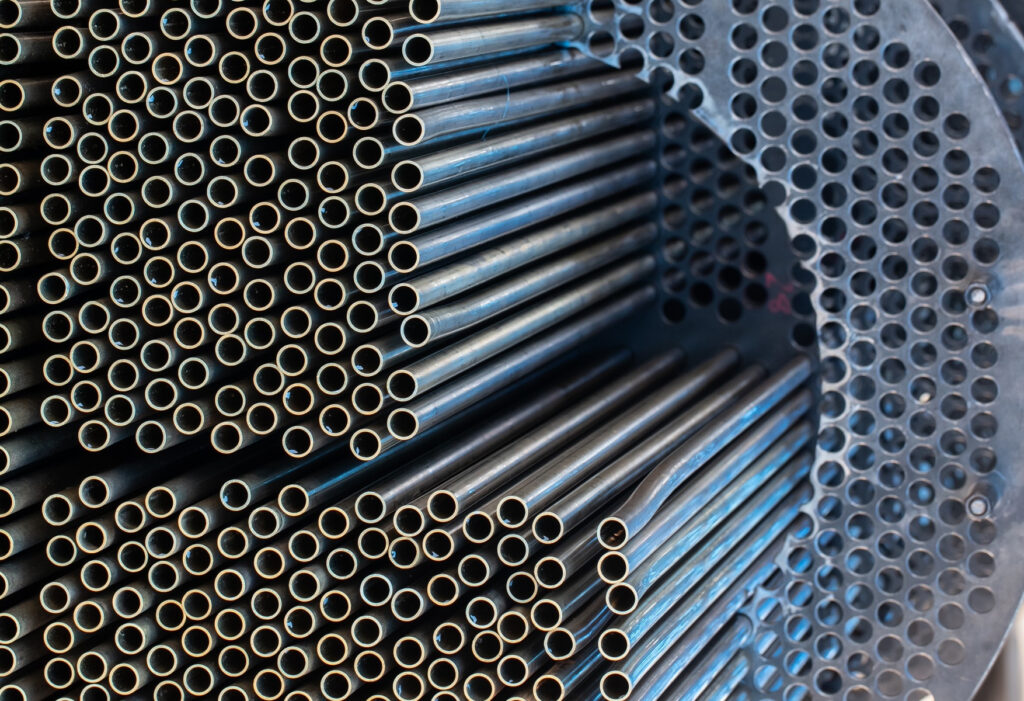
ASTM A213 is the gold standard for high-temperature and high-pressure performance. This specification covers seamless ferritic and austenitic alloy steel tubes. Manufacturers specifically engineer these components for use as boiler tubes, superheaters, condensers, and precision heat exchangers.
When an environment involves extreme thermal stress, engineers turn to A213. The standard mandates strict metallurgical requirements to ensure the metal retains its structural integrity even when exposed to boiling fluids and superheated steam. Because these components sit at the heart of power generation and heat transfer systems, they must exhibit exceptional creep resistance and high-temperature yield strength.
2. What Is ASTM A269?
ASTM A269 focuses heavily on general corrosion-resistant service. This specification outlines the requirements for both nominal-wall-thickness seamless and welded austenitic stainless steel tubing. You will most commonly see this standard applied in instrumentation networks, low-pressure process lines, and hydraulic systems.
Unlike A213, which is built for extreme heat, A269 is optimised for moderate temperature systems. It is the go-to choice for fluid transport in environments where rust and chemical degradation are the primary concerns rather than intense pressure. Facilities use this tubing for control lines, chemical sampling, and sanitary transport where precise flow and clean surfaces are non-negotiable.
3. What Is ASTM A312?
ASTM A312 is the definitive standard for heavy-duty pipeline construction. It covers seamless, welded, and heavily cold-worked stainless steel pipes intended for high-pressure and highly corrosive service piping.
This is the backbone of large-scale fluid movement. You will find A312 pipes dominating the infrastructure of chemical processing plants, oil and gas refineries, and industrial fluid transport networks. Because these pipelines carry hazardous, volatile, or highly pressurised substances across long distances, the standard requires rigorous testing to guarantee uniform strength. The focus here is on structural bulk, immense pressure containment, and long-term durability in punishing outdoor or chemical environments.
ASTM A213 vs A269 vs A312: Key Differences Explained
Selecting the right product requires a deep understanding of how these three specifications diverge in practical application. The differences dictate everything from how the metal is tested in the factory to how it is installed in your facility.
1. Application and End Use
The most immediate difference between these standards lies in their intended operational environment. You cannot safely swap one for the other without risking mechanical failure.
| Standard | Core Focus | Best Industrial Use |
| ASTM A213 | Thermal transfer and extreme heat | Boilers, superheaters, heat exchangers |
| ASTM A269 | General corrosion and precision | Instrumentation, hydraulic control lines, and general service |
| ASTM A312 | Heavy volume and high pressure | Chemical plants, Process piping, petrochemical refineries transport |
2. Tube vs Pipe: What’s the Difference?
This is a critical distinction that many buyers overlook. The terminology directly impacts your engineering blueprints and installation methods.
Standards A213 and A269 specifically apply to tubes. In the engineering world, a stainless steel seamless tube measurement relies on strict outside diameter and precise wall thickness. Tubes require exact mathematical tolerances because they must fit perfectly into heat exchanger tube sheets, compression fittings, and delicate instrumentation panels.
Standard A312 applies strictly to pipes. A stainless steel seamless pipe is measured by Nominal Pipe Size and a corresponding schedule number, which dictates the wall thickness. Pipes are designed to transport large volumes of fluids and gases across long distances. Therefore, the internal capacity matters much more than the exact fractional outside measurement. When you order a stainless steel pipe, you are buying structural volume and flow capacity rather than millimetre-perfect external dimensions.
3. Pressure and Temperature Capability
Heat and pressure are the ultimate stress tests for any metal. Each standard has a specific threshold dictated by its manufacturing process.
ASTM A213 is the undisputed champion of extreme thermal environments. This standard requires advanced heat treatment during manufacturing to stabilise the grain structure of the metal. It is best for very high temperature applications, volatile steam service, and high-capacity pressure boilers. The metal will not warp or scale even when continuously exposed to furnace-level heat.
ASTM A269 serves a much different operational profile. It is best for low to medium pressure systems operating at ambient to moderate temperatures. While it offers fantastic resistance to environmental corrosion, it lacks the specialised heat treatments required to survive inside a boiler. Applying A269 in a high-heat scenario can lead to rapid metal fatigue.
ASTM A312 is engineered for brute force. It is best for high-pressure process pipelines carrying corrosive fluids and volatile industrial gases. While it handles heat well, its primary strength lies in containing massive internal pressure surges without rupturing. The thick walls and strict structural integrity checks make it ideal for the main arteries of a petrochemical plant.
4. Testing and Quality Requirements
Industrial buyers must pay close attention to the testing protocols mandated by each standard. These quality checks are your insurance policy against catastrophic plant failures.
ASTM A213 requires rigorous destructive and non-destructive testing to ensure safety in explosive boiler environments. Manufacturers must perform a flattening test to ensure the metal can be deformed without cracking. They also conduct a flaring test to verify that the tube can be expanded for fitting insertion. Furthermore, hardness tests confirm the metal’s strength, while mandatory hydrostatic tests and eddy current testing detect microscopic internal flaws that could cause a leak under steam pressure.
ASTM A269 testing focuses more on environmental survival and exact sizing. The standard mandates strict dimensional checks to ensure the tubing will fit seamlessly into tight instrumentation gauges. It requires thorough corrosion testing to prove the material can withstand harsh chemicals. While non-destructive testing is often optional depending on the buyer’s specific purchase order, the basic requirements prioritise surface integrity over explosive pressure containment.
ASTM A312 testing is designed to validate structural dominance. Manufacturers must subject every stainless steel seamless pipe to either a severe hydrostatic water test or advanced non-destructive testing to verify that the entire length of the pipeline is leak-proof. The standard also requires strict tensile tests to measure how much pulling force the pipe can withstand before snapping. Hardness checks are standard to guarantee the pipeline can survive heavy industrial impacts.
Material Grades Commonly Used in These Standards
The standard dictates the manufacturing and testing methods, but the raw material grade determines the chemical resistance of your stainless steel seamless tubes. Choosing the right alloy combination is just as important as choosing the right ASTM specification.
Popular Stainless Steel Grades
The 300 series of austenitic stainless steel provides the foundation for most premium industrial piping. Each grade contains a specific chemical recipe tailored for different hazards.
304 and 304L: This is the most widely used industrial alloy. It offers excellent baseline corrosion resistance and forming characteristics. By choosing the ‘L’ variant, you are opting for a reduced carbon content that effectively inhibits the formation of harmful carbide precipitates throughout the welding process. Engineers use 304 for general chemical transport, water treatment facilities, and standard food processing plants where extreme chlorides are not present.
316 and 316L: This is the heavy-duty upgrade to standard 304. Grade 316 contains a significant addition of molybdenum. This element dramatically increases the metal’s resistance to pitting and crevice corrosion in chloride-rich environments. You will almost exclusively see 316 and 316L used for marine applications, coastal refineries, and highly aggressive chemical processing plants.
321: This grade takes standard austenitic steel and stabilises it with titanium. The titanium addition prevents the metal from degrading when exposed to prolonged temperatures between 800 and 1500 degrees Fahrenheit. Because of this high-temperature stability, 321 is a premier choice for heavy-duty refinery equipment and aerospace exhaust systems.
347: Similar to 321, grade 347 is designed for extreme thermal stability. However, instead of titanium, it utilises a columbium and tantalum addition. This makes it incredibly resistant to intergranular corrosion after welding. It is frequently specified for heavy-wall boiler casings, high-temperature chemical reactor vessels, and complex stainless steel seamless tubes installations that require extensive on-site welding.
Which Standard Should You Choose for Your Industry
Bridging the gap between technical specifications and real-world applications is the key to successful procurement. Here is how you should align these standards with your specific facility requirements.
1. For Heat Exchangers and Boilers
If you are building or maintaining power generation equipment, thermal processing units, or steam condensers, you must prioritise high-temperature stability. The alloy must endure relentless fluctuations in temperature and the immense force of pressurized fluids. For these critical energy-transfer applications, we strongly recommend ASTM A213. It provides the strict metallurgical guarantees and destructive testing verifications necessary to prevent explosive failures in heat exchangers and boilers.
2. For Instrumentation and Process Tubing
If your project involves running control lines, pneumatic networks, hydraulic fluid systems, or sanitary food-grade transport, your primary concerns are clean surfaces, precise dimensions, and general corrosion resistance. Extreme heat is rarely a factor here. For these precision networks, we recommend ASTM A269. It delivers the tight tolerances required for compression fittings and the chemical resistance needed for long-lasting instrumentation and process tubing.
3. For Chemical Plants and Pressure Piping
If you are constructing the main fluid transport arteries of an industrial facility, you need structural volume and absolute leak prevention. Whether you are moving crude oil, acidic chemical slurries, or high-pressure natural gas, the piping must withstand immense internal forces and harsh external environments. For these massive infrastructure projects, we recommend ASTM A312. A properly tested stainless steel seamless pipe manufactured to this standard will provide decades of reliable service in chemical plants and high-pressure process pipelines.
How Anand Seamless Limited Helps You Choose the Right Stainless Steel Seamless Tube
Sourcing premium industrial components requires a manufacturing partner who understands the high stakes of your engineering projects. Anand Seamless Limited brings decades of industry expertise to every order we process. We do not just sell metal, we provide engineered solutions designed to keep your facilities running safely and efficiently.
Our state-of-the-art facilities focus on precision manufacturing to deliver components with flawless internal surfaces and exact dimensional accuracy. We maintain total quality compliance at every stage of production. Whether you require standard sizes for a quick repair or custom dimensions for a massive new plant build, our production capabilities can scale to meet your exact blueprint requirements.
We inventory and process multiple grades of high-performance alloys. Our technical team ensures total ASTM standard compliance, providing you with full material test reports and traceability documentation for every shipment. When you partner with Anand Seamless Limited, you gain access to comprehensive project consultation. Our engineers will work directly with your procurement team to evaluate your operational environment and recommend the perfect stainless steel seamless tubes for your specific pressure and temperature needs.
Need Help Choosing the Right Seamless Tube for Your Project?
Do not leave your plant’s safety and efficiency to chance. Connect with the technical experts at Anand Seamless Limited today. We will help you navigate complex ASTM specifications and source the seamless tube required to ensure your next industrial project is a complete success.
Contact us at +91 90999 96853 or drop us an email at biz@anandseamless.com (international) or inquiry@anandseamless.com (India) to request a customised quote.