
High-Frequency Welded vs Laser-Welded Fin Tubes: Manufacturing Process, Parameters & Applications Compared
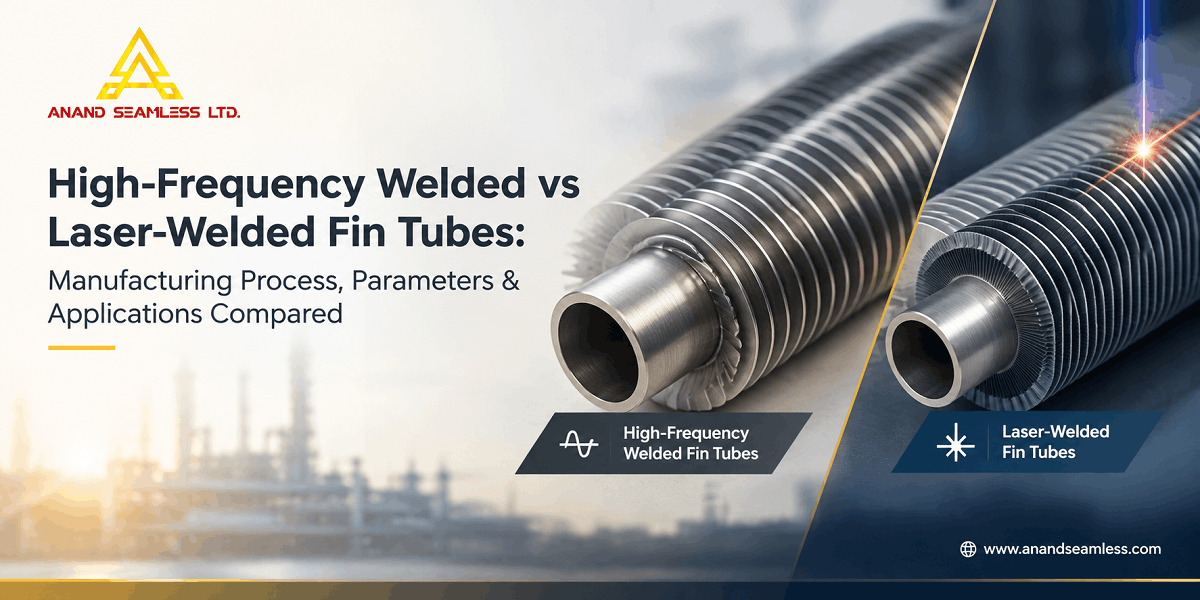
Choosing the wrong fin-to-tube welding method can cost you months of downtime in a supercritical boiler or a costly warranty claim on an HRSG bundle. In 2026, as heat exchanger designs push toward higher pressures and exotic alloys, engineers keep asking the same question: high-frequency welded fin tubes vs laser-welded fin tubes — which one actually fits their application, and why?
High-frequency welded fin tubes vs laser-welded fin tubes refers to two different methods of bonding a metal fin to a tube’s outer surface to form a finned heat exchanger tube. HF welding uses electrical resistance heating and mechanical pressure to forge-weld the fin to the tube without filler metal, while laser welding uses a focused laser beam to melt a precise weld pool at the fin-tube junction. Both processes are used to manufacture finned tubes for boilers, economizers, and heat exchangers, but they differ significantly in material compatibility, heat-affected zone size, production speed, and capital cost.
This guide compares both processes in detail — the manufacturing steps, the technical parameters that actually matter, and which applications each method is genuinely suited for — so you can specify the right fin tube for your project instead of guessing from a datasheet.
What Is the Difference Between High-Frequency Welding and Laser Welding for Fin Tubes?
The core difference is how heat is generated at the fin-to-tube joint. HF welding induces an electric current through the fin and tube using high-frequency electromagnetic induction; resistance to that current heats both surfaces to forging temperature, and mechanical pressure from the tensioned fin then forges the two together — no filler metal, no flux, no external heat source beyond the induced current.
Laser welding instead directs a focused beam — typically from a pulsed Nd:YAG, fiber, or disk laser — precisely at the acute-angle junction where the fin meets the tube. The beam melts a small, controlled weld pool that fuses the fin edge to the tube wall. Because the heat input is far more localized and controllable, laser welding produces a narrower heat-affected zone (HAZ) than HF welding, which matters enormously when the base material is a corrosion-sensitive alloy rather than plain carbon steel.
In practice, both are used to manufacture high-frequency welded finned tubes and laser-welded fin tubes at industrial scale — the decision usually comes down to base material, required weld integrity, and production volume, which we break down below.
Manufacturing Process Compared: How HF Welding and Laser Welding Actually Work
High-Frequency Welding Process
A metal strip is helically wound under tension onto a rotating tube. As it feeds toward the contact point, electrodes near the fin and the tube induce a high-frequency current; resistance heating brings both surfaces to forging temperature almost instantly. The tension in the fin then provides the compressive force needed to forge-weld the fin edge into the tube surface, fusing the two within a band roughly 10 microns wide. This is a continuous, inline process — tubes can be fed at several metres per minute, making it one of the fastest fin-welding methods in production today.
Laser Welding Process
The tube still rotates and the fin still feeds under tension, but instead of induced current, a laser head is angled into the fin-tube junction at an acute angle (commonly under 45°) to take advantage of beam reflection at the joint. Pulse duration, travel speed, and beam power are tuned precisely to the base material — a duplex stainless steel or Inconel 625 tube needs very different parameters than a carbon steel one. Because the process is beam-based rather than current-based, it can join dissimilar or exotic materials that HF welding cannot handle reliably, but it typically runs slower per metre and requires a much higher capital investment in the welding cell itself.
Technical Parameters Compared: Weld Quality, Heat-Affected Zone, Speed & Cost
The table below summarizes the parameters that matter most when specifying either process for a heat exchanger or boiler fin tube project.
| Parameter | High-Frequency Welded Fin Tubes | Laser-Welded Fin Tubes |
|---|---|---|
| Heat source | Induced electric current (resistance/forge welding) | Focused laser beam (fusion welding) |
| Filler metal / flux | None required | None required |
| Typical weld zone width | ~10 microns at the fin-tube interface | Narrower, highly localized heat-affected zone |
| Best-suited base materials | Carbon steel, low-alloy steel | Stainless steel, duplex/super-duplex, Inconel and other nickel alloys |
| Production speed | Very high — continuous inline feed, several metres/min | Slower per metre; precision-limited feed rate |
| Capital investment | Comparatively low | Significantly higher (laser welding cell, beam control systems) |
| Typical application tier | Standard boilers, HRSGs, waste-heat recovery, economizers | Supercritical/ultra-supercritical boilers, corrosion-critical or high-alloy service |
One point worth flagging for engineers comparing thermal performance data sheets: once a weld is properly formed — free of the spatter and discontinuities seen in poor-quality fusion (MAG) welding — published research has found that the thermal performance of a finned tube is not meaningfully different between HF-welded and laser-welded joints. The decision, in other words, is driven far more by material compatibility and production economics than by any inherent heat-transfer advantage of one method over the other.
Which Materials and Applications Suit Each Welding Method?
High-frequency welded fin tubes dominate where carbon steel or low-alloy steel is the base material and volumes are high — this covers the large majority of industrial boiler, HRSG, and waste-heat recovery installations. If you’re specifying welded fin tubes for a refinery or petrochemical plant at standard operating pressures, HF welding is almost always the more economical and equally reliable choice.
Laser welding earns its place when the base tube material shifts to something HF welding struggles with reliably — austenitic stainless steels, duplex and super-duplex grades, or high-nickel alloys like Inconel 625, which are increasingly specified for supercritical and ultra-supercritical boiler service. The tightly controlled heat input protects the alloy’s microstructure near the weld, which matters when the tube will operate under extreme pressure and temperature for decades.
- Choose HF-welded fin tubes for: standard boilers, air-cooled heat exchangers, waste-heat recovery units, and any high-volume carbon/low-alloy steel finned tube requirement.
- Choose laser-welded fin tubes for: supercritical/ultra-supercritical boilers, corrosion-critical process environments, and projects specifying duplex, super-duplex, or nickel-alloy base tubes.
Is Laser-Welded Always Better Than HF-Welded Fin Tubes?
No — laser welding is not a universal upgrade over HF welding. It is the better choice specifically when the base material or service conditions demand it, not simply because it is the newer or more precise technology. For a standard carbon-steel finned tube running in a conventional boiler, HF welding delivers comparable weld integrity and thermal performance at a fraction of the capital cost and at much higher production speed.
Where laser welding genuinely earns its premium is on exotic alloys and supercritical service, where HF welding’s higher heat input and current-based process are harder to control precisely enough to protect the base metal’s microstructure. Specifying laser welding for a routine carbon-steel application typically adds cost without adding measurable performance.
Which Welding Method Should You Choose for Your Fin Tube Project?
Use this quick decision framework before finalizing your fin tube specification:
- Identify your base tube material first. Carbon or low-alloy steel points toward HF welding by default; stainless, duplex, or nickel-alloy tubes point toward laser welding.
- Check your operating pressure and temperature class. Supercritical and ultra-supercritical boiler service generally requires the tighter heat-affected zone control that laser welding provides.
- Factor in volume and lead time. High-volume standard finned tube orders are almost always more cost- and time-efficient with HF welding.
- Confirm with your manufacturer’s weld qualification data. Ask for fin-pull-off test results and hardness-difference data across the weld and heat-affected zone for your specific material and dimensions — this is the real evidence of weld quality, not the welding method name alone.
If you’re still narrowing down the right fin tube type for your heat exchanger design, it’s worth reviewing fin geometry and spacing alongside the welding method — see our guide on fin design and heat transfer performance for how these factors interact.
Conclusion
The choice between high-frequency welded fin tubes vs laser-welded fin tubes ultimately comes down to base material, operating conditions, and production economics rather than a simple “which is better” answer. HF welding remains the fastest, most cost-effective method for standard carbon and low-alloy steel finned tubes used across boilers, HRSGs, and waste-heat recovery systems. Laser welding earns its higher cost specifically on exotic alloys and supercritical-class service, where a tightly controlled heat-affected zone protects the base metal for decades of operation. Specify based on your material and service class first — the right welding method will follow naturally from there.
Frequently Asked Questions
Is HF welding stronger than laser welding for fin tubes?
Neither method is inherently stronger — weld strength depends on process control and base material compatibility rather than the welding technology itself. Properly executed HF welds on carbon steel and properly executed laser welds on stainless or nickel-alloy tubes both meet fin-pull-off strength requirements for their respective applications.
Can HF welding be used on stainless steel fin tubes?
HF welding can be applied to stainless steel, but laser welding is generally preferred for stainless, duplex, and nickel-alloy tubes because its narrower heat-affected zone better protects corrosion resistance and microstructure near the weld.
Why is laser welding more expensive than HF welding?
Laser welding requires a significantly higher capital investment in beam-control and precision feed systems, and it typically runs at a slower feed rate than HF welding’s continuous inline process, which increases per-metre production cost.
Does the welding method affect the thermal performance of a finned tube?
Once a weld is properly formed without spatter or discontinuities, research indicates that thermal performance does not differ meaningfully between HF-welded and laser-welded fin tubes. Poor-quality fusion welding (such as substandard MAG welding), not the HF-vs-laser choice, is what typically degrades thermal performance.
Which welding method does Anand Seamless recommend for boiler fin tubes?
For standard carbon and low-alloy steel boiler and HRSG applications, high-frequency welding is the recommended and most cost-effective method. For supercritical boiler service or projects specifying duplex, super-duplex, or Inconel-grade tubes, laser welding is the better fit. Our engineering team can confirm the right process once your material grade and service conditions are known.
Get the Right Fin Tube Specification for Your Project
Not sure whether your application calls for high-frequency welded or laser-welded fin tubes? Contact Anand Seamless with your material grade, pressure class, and dimensional requirements, and our team will help you specify the correct fin tube type for your heat exchanger or boiler project.